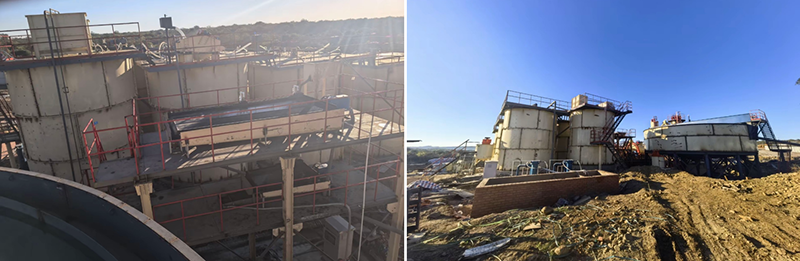
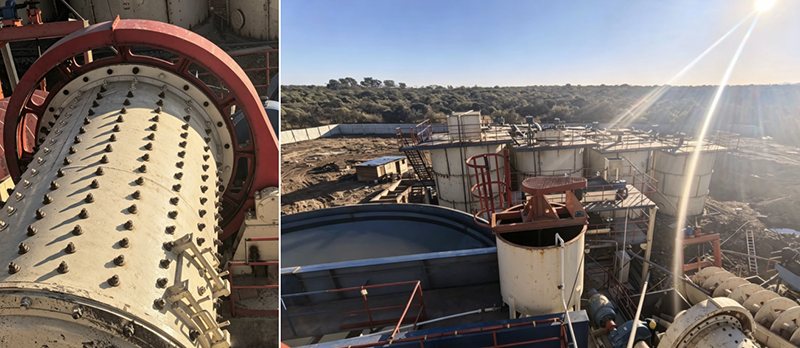
300 TPD Gold CIP (Carbon-in-Pulp) Processing Plant in Zimbabwe
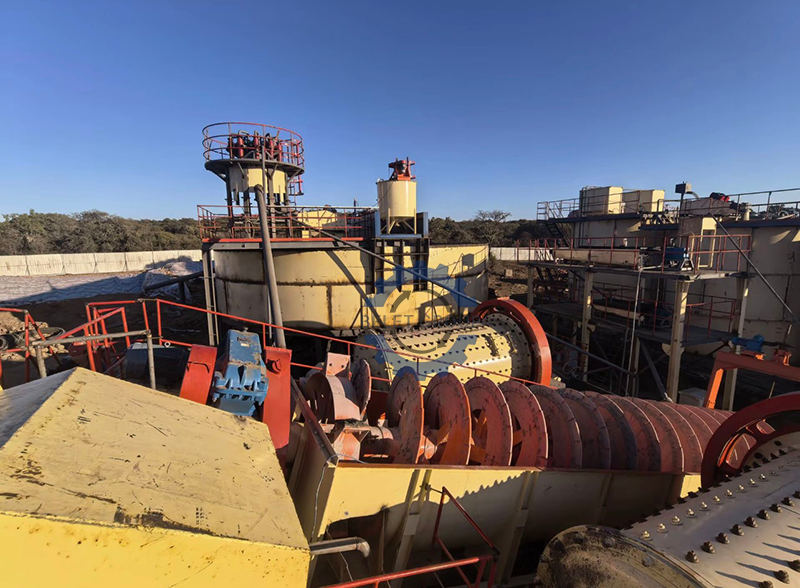
Project: Project Details
Location: Zimbabwe
Processing Capacity: 300 t/d
Feed Material: Lode gold ore (grade: 2.3 g/t)
Main Process: CIP (Carbon-in-Pulp)
Target Product: Gold concentrate
Solutions for Oxidized Gold Ores — Maximize Gold Recovery Rate Up to 90%+ with Energy-Efficient Technology.

1. Gold Ore Types Suitable for CIP
Our CIP (Carbon-in-Pulp) solution is specifically engineered for high-efficiency extraction from:
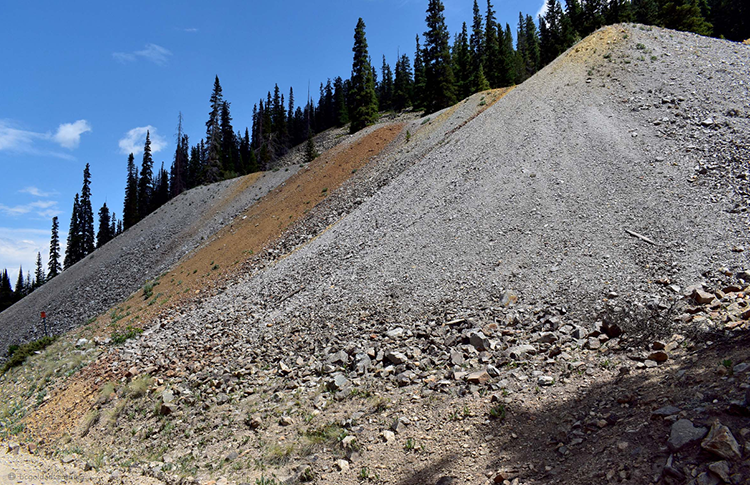
-- Oxidized Gold Ores: Highly weathered, low-sulfide ores with excellent cyanidation response.
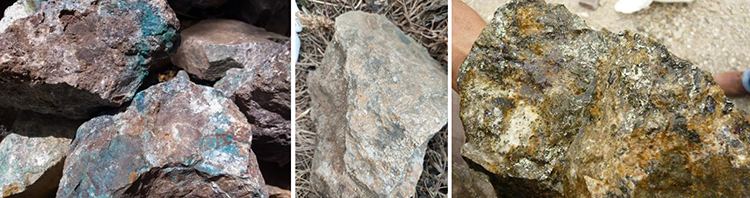
-- Clay-rich / Fine-grained Gold Ores: Excellent for direct agitation leaching without solid-liquid separation bottlenecks.
-- Tailings Re-processing: Ideal for recovering fine gold from historical gravity or heap leach tailings.
2. Real Field Operations & On-Site Experience
Successfully commissioned 300 TPD Gold CIP projects operating in Africa, South America, and Southeast Asia.
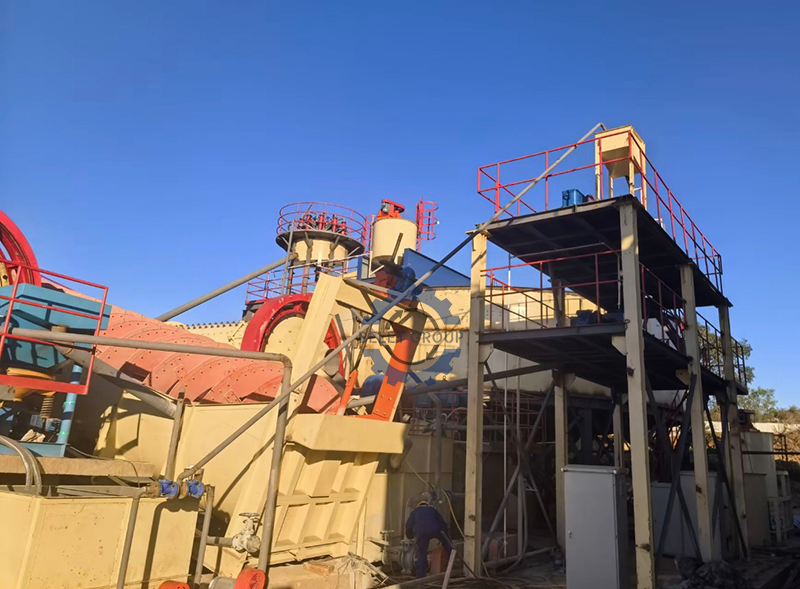
Compact & Rugged Layout: Custom modular design optimized for remote mining locations and hilly terrains.
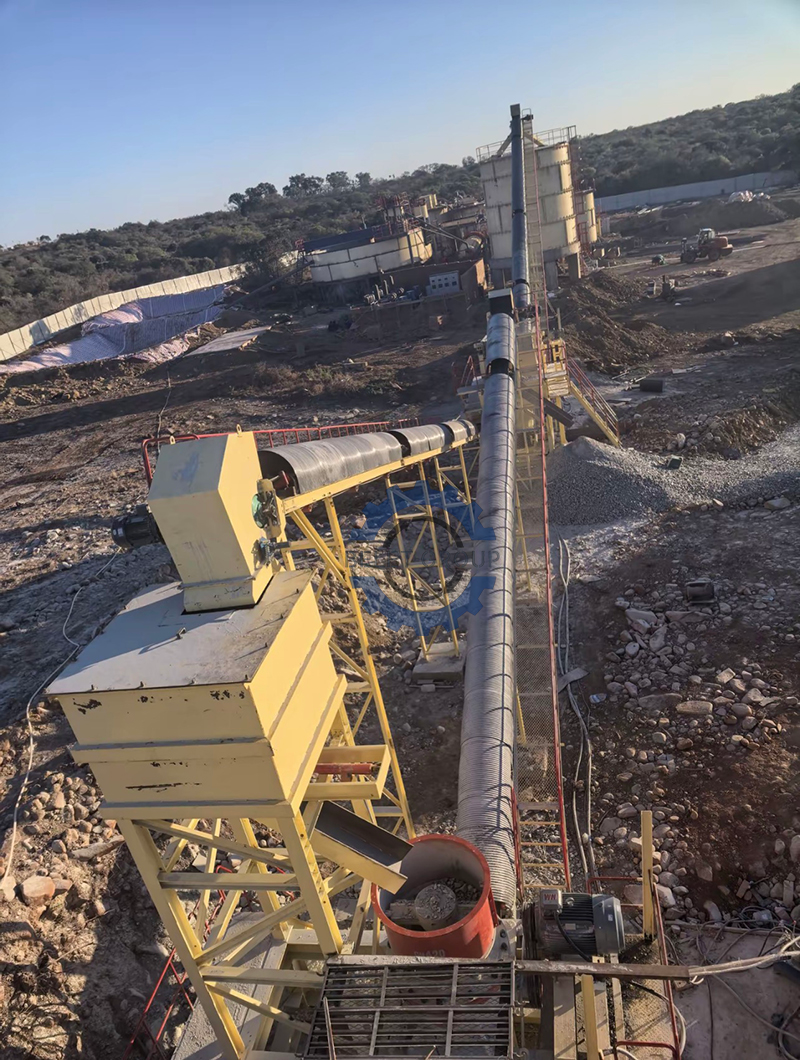
Fast On-Site Erection: Pre-engineered steel structures and pre-wired skid equipment ensure rapid installation and commissioning within 60–90 days.
3. Process Introduction & Technical Flowsheet
Process Summary
The 300 TPD Gold CIP process integrates two-stage closed-circuit grinding, high-efficiency slurry thickening, cyanide agitation leaching, activated carbon adsorption, and high-temperature/high-pressure desorption-electrowinning.
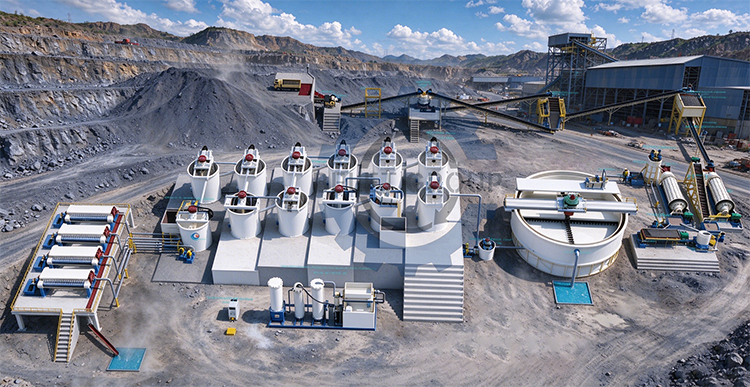

Detailed 5-Stage Flowsheet
1. Crushing & Crushed Ore Feeding:
Raw ore is dumped into the receiving hopper by loader, transferred via vibrating feeder and belt conveyor to the grinding circuit.
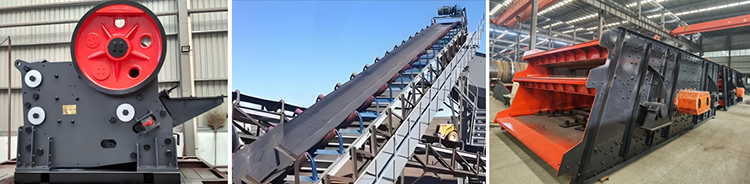
2. Two-Stage Closed-Circuit Grinding & Classification:
Stage 1: Wet Ball Mill working with a Spiral Classifier.
Stage 2: Slurry pump/VFD feeds the slurry to Hydrocyclones and a second Ball Mill to achieve finely ground particle size (80–85% -200 mesh). Trash screen (Linear screen) removes wood chips and debris prior to thickening.
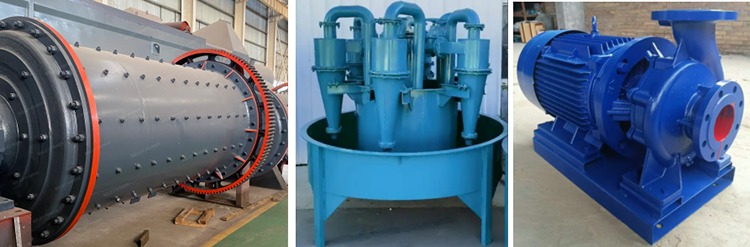
3. Thickening & Slurry Conditioning:
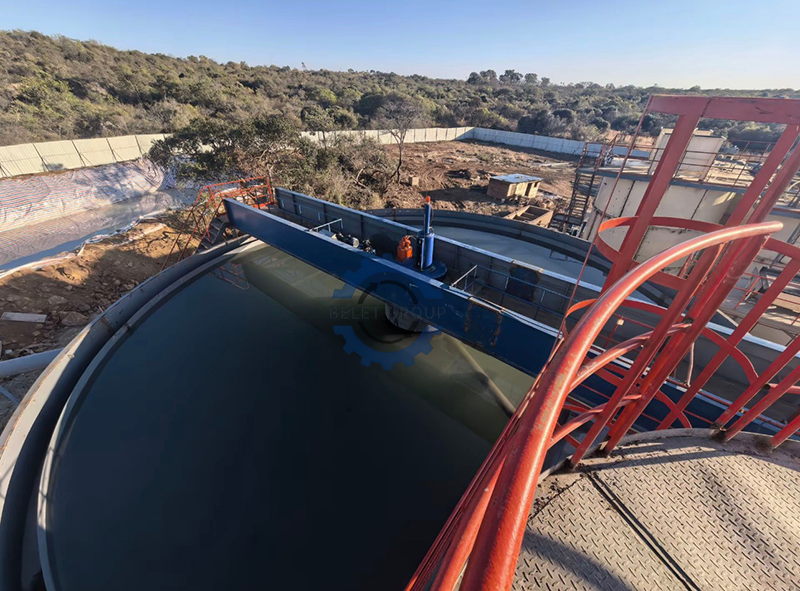
Slurry flows into a High-Efficiency Thickener to increase pulp density (35–45% solids) before entering the leaching circuit. Lime and chemical mixing tanks precisely control pH and oxidation levels.
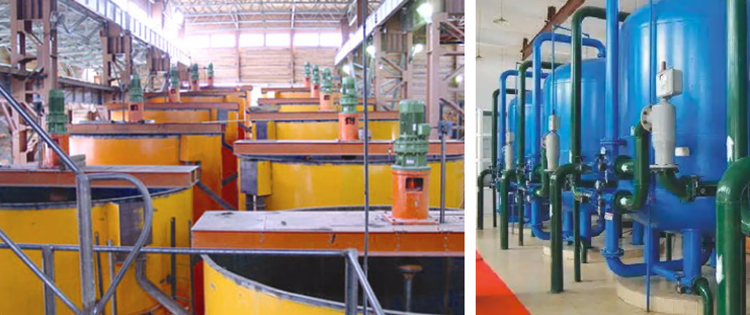
4. Cyanide Leaching & Carbon Adsorption:
Slurry passes through series-connected Leaching & Adsorption Tanks equipped with dual-impeller agitators and air sparging (Roots blowers). Coconut shell activated carbon absorbs gold-cyanide complexes directly from the slurry in a counter-current arrangement.
5. Desorption, Electrowinning & Carbon Regeneration:
Loaded carbon undergoes high-temperature, high-pressure desorption and electrowinning to produce gold bullion (bars). Stripped carbon is thermally regenerated in a carbon regeneration kiln for continuous reuse.
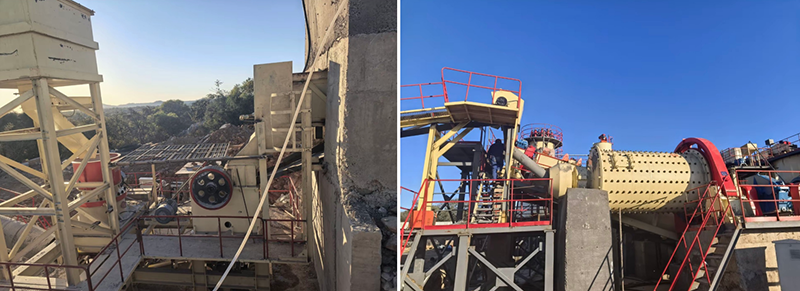
4. Key Technical Highlights
-- High Gold Recovery: Counter-current CIP configuration minimizes un-absorbed gold losses.
-- Heavy-Duty Grinding Performance: Premium QM1.83x4.5m Ball Mill built with ZG310-570 main gears and ZGMn13Cr2 wear-resistant liners.
-- Low Chemical & Power Consumption: Automated VFD slurry pumping and optimized tank agitation cut electrical and chemical costs by up to 15–20%.
-- Zero Liquid Discharge Capability: Process water is recycled via the thickener overflow tank, complying with strict environmental standards.